The Science Library
Articles
10
References cited
60
Tissues covered
6
Protocol steps
66
Corpus reading time
126min
How to read a Recovery Lab article
Three layers, in the same order, every time. The point of a fixed format is that you can tell instantly when a layer is thin, and thin layers are where bad advice comes from.
Research
What was actually studied, in whom, and how well.
Sample sizes, populations, endpoints, and the difference between a surrogate marker and an outcome. Every article grades its central claim from A to D, and grades individual claims separately when they disagree.
Mechanism
What is physically happening, at the level of chemistry.
Named molecules, named cells, real timescales. Inflammation is a signaling cascade, not a vibe. If an article cannot say which enzyme, which receptor, or which gradient, it says so instead of gesturing.
Protocol
What to do on Tuesday morning, traced back to layer two.
Actionable steps with the specific piece of physiology each one exploits printed beside it, and its own evidence grade. If a step cannot name its mechanism, it does not belong in the protocol.
The grading key
What the letter next to a title means
- Grade A
- Multiple well-controlled human trials or settled physiology. Would take an extraordinary result to move.
- Grade B
- Consistent human evidence with real limitations: small samples, surrogate endpoints, or few athlete populations.
- Grade C
- Mixed or mechanistic evidence. The direction is plausible, the effect size is not established.
- Grade D
- Weak, conflicting, or largely extrapolated from animal and in-vitro work. Published here because the question gets asked constantly.
Every article also ends with a panel titled what would change my mind, listing the findings that would force a revision. A library that cannot be wrong is not a library, it is a brochure.
Under the lens
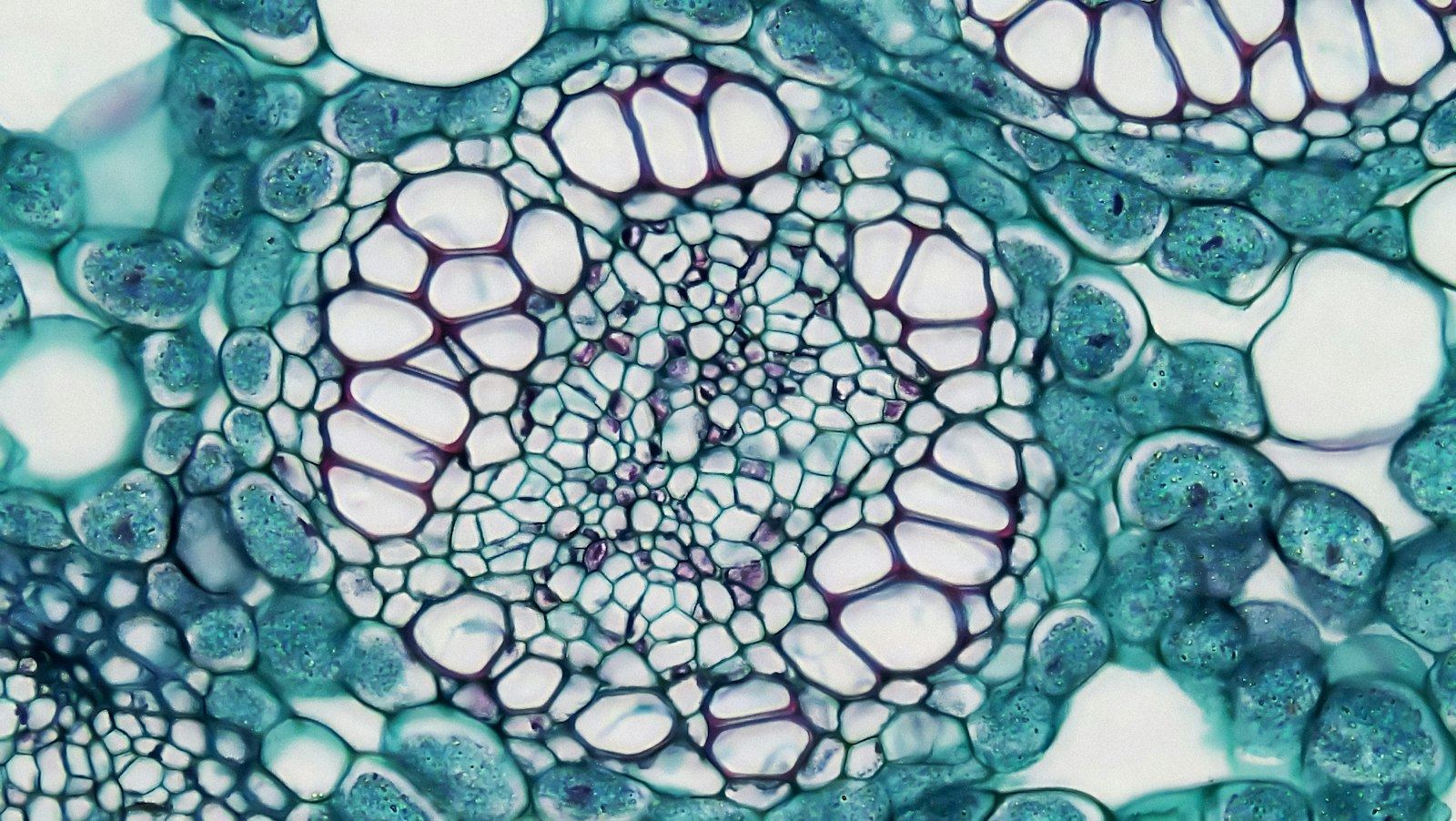
Healing is a construction project with a supply chain.
Collagen precursors, satellite cells, and a mechanical load telling the tissue which direction to build in. Every entry in the corpus names which of those it is about.
The register
Filter by tissue or by how strong the evidence actually is. References span 1968 to 2023, and the weak ones are labeled weak.
Tissue
Evidence grade
Order by
10 of 10 specimens
- SL-01
The inflammation cascade: what actually happens in the first 72 hours
Swelling is not the injury. It is a repair crew arriving in a fixed order on a fixed clock, and most of what athletes do in the first three days is an attempt to slow that crew down.
MuscleSystemicinflammationNSAIDsmacrophagesEvidenceB12 min read
- SL-02
What “rebuilding muscle” chemically means
Hypertrophy is not a mystery of effort. It is a mechanically triggered kinase cascade with a substrate requirement and a roughly two-day window, and every training rule you have been given is downstream of that.
MusclehypertrophymTORsatellite cellsEvidenceA13 min read
- SL-03
Tendon versus ligament: two collagen tissues, two very different fates
They look like the same white cord under a scalpel. One of them turns over its collagen almost not at all, the other sits in synovial fluid and frequently never returns. Neither of them responds to rest.
TendonLigamenttendinopathycollagenACLEvidenceB14 min read
- SL-04
What cold actually does to tissue
Ice is not a healing agent, it is a thermodynamic intervention with three real effects and one expensive side effect. Knowing which one you want decides whether it belongs in your week.
MuscleSystemicNeuralcryotherapycold water immersionvasoconstrictionEvidenceB12 min read
- SL-05
The truth about lactate and soreness
Lactate is a fuel and a signaling molecule that your heart and brain compete to consume. It is not an acid, it does not cause soreness, and it is gone long before you wake up sore.
MuscleSystemiclactateDOMSacidosisEvidenceA11 min read
- SL-06
Sleep is the anabolic window
Growth hormone is released in a pulse locked to slow-wave sleep, the brain runs its clearance system mostly at night, and adolescent athletes sleeping under eight hours get injured close to twice as often. It is the highest-yield recovery intervention and it is free.
SystemicNeuralMusclesleepgrowth hormoneglymphaticEvidenceB12 min read
- SL-07
Bone remodeling and stress fractures: the lattice that rebuilds itself badly under a deadline
Bone is not scaffolding, it is a tissue that continuously demolishes and replaces itself to fit the loads it is given. A stress fracture is that process losing a race it was never told it was in.
Bonestress fractureremodelingWolff's lawEvidenceB14 min read
- SL-08
Protein timing, honestly
The anabolic window was one of the most successful pieces of sports nutrition marketing ever produced. The underlying physiology is real; the urgency was invented.
MuscleSystemicproteinleucinenutrient timingEvidenceB11 min read
- SL-09
Return to play after a lateral ankle sprain
The most common injury in indoor sport is also the most casually managed. The ligament is rarely the lasting problem: the map of where your foot is in space is.
LigamentNeuralankle sprainproprioceptionchronic instabilityEvidenceB13 min read
- SL-10
Concussion: the metabolic injury
A concussion is not a bruise on the brain. It is an ionic and metabolic crisis in cells that look structurally normal, which is why the scan is clean and the athlete is not.
Neuralconcussionenergy crisisreturn to learnEvidenceB14 min read
The library is the engine, not the whole instrument
Education, not diagnosis. This is a science education platform. Nothing here replaces a physician, a physical therapist, or an athletic trainer. Sudden severe pain, numbness, an inability to bear weight, or visible deformity means stop reading and get seen.