Move the variables. Watch the physiology answer.
Four recovery treatments rebuilt as instruments. Set the water temperature and the clock and the tissue temperature curves respond at five depths. Log last night's sleep and this week's training load and get a readiness score with every weight and subtotal on the screen. Pick a stiff ankle and a goal and get an ordered session where each drill names the mechanism it is exploiting.
These are teaching models, not measurements of you. That distinction is the whole point, so every instrument publishes its constants and its blind spots next to its output.
Education, not diagnosis. This is a science education platform. Nothing here replaces a physician, a physical therapist, or an athletic trainer. Sudden severe pain, numbness, an inability to bear weight, or visible deformity means stop reading and get seen.
Each instrument also carries its own interlocks: the specific settings where the protocol stops being a training decision and becomes a medical one. Those are not decoration. They are the part of the page that changes what you should do.
PL-01 · Set the water temperature and the clock. Watch five tissue depths cool, and read the adaptation bill. Linkable at /lab#cold.
Cold Exposure Explorer
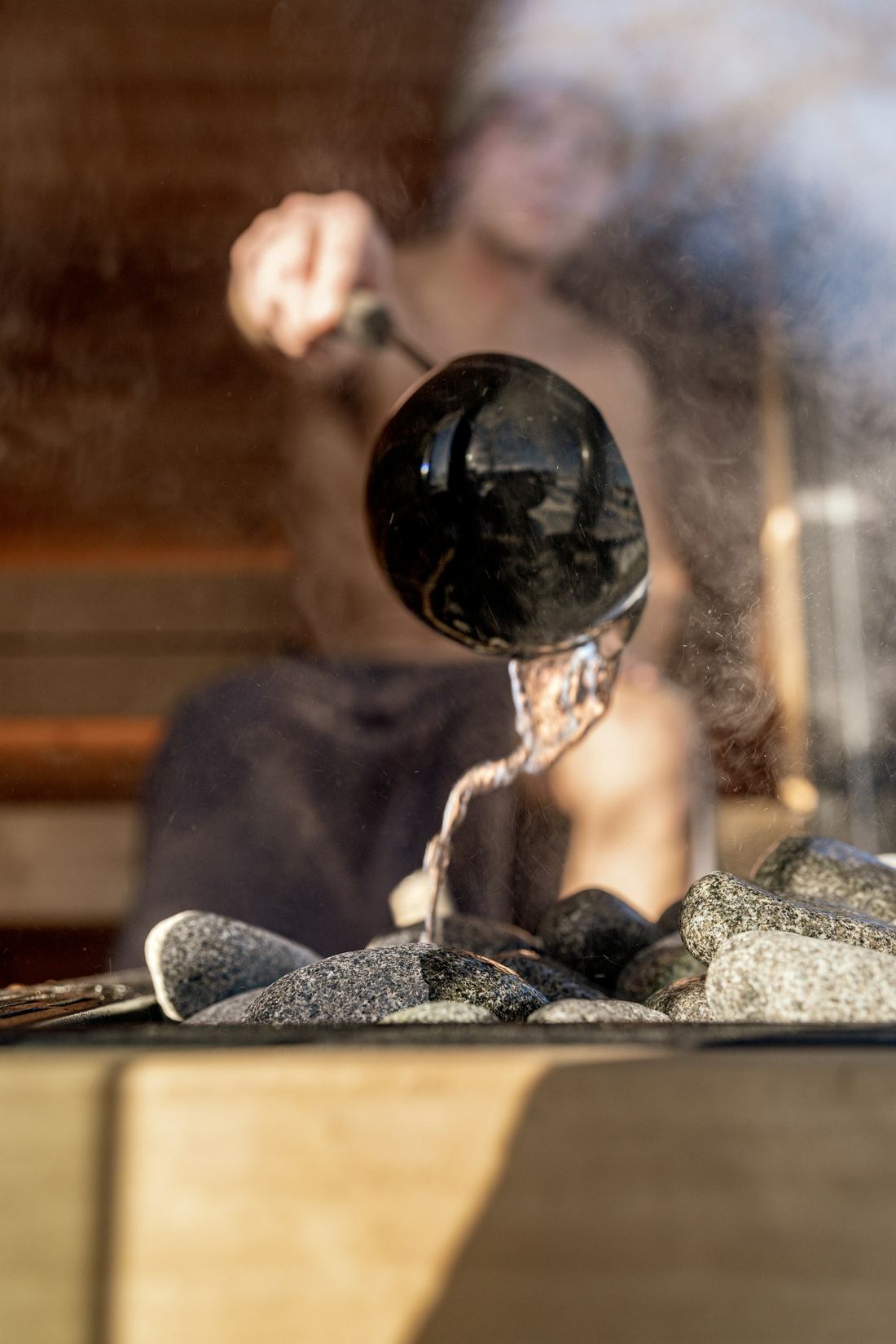
Cold-water immersion, modeled as what it physically is: a thermal gradient marching inward from the skin while sympathetic vasoconstriction cuts the blood supply that would otherwise carry the heat back. Move the five controls and watch which tissues actually get cold, how much analgesia you buy, and what it costs you if you are in a training block rather than a competition week.
Inputs
Set the protocol
11.0°C
Drives the thermal gradient at the skin. Every degree colder steepens the gradient that pushes heat out of the tissue.
11.0min
Time is how the gradient reaches depth. Skin cools in about two minutes, muscle at 3 cm needs twenty and keeps going after you get out.
Sets the immersed surface area (0.42 of body surface) and therefore the systemic dose. Full lower body: quadriceps, hamstrings, glutes, calves.
64kg
Stands in for subcutaneous fat thickness, the biggest single determinant of how far the cold travels. Insulation factor here: 0.97x.
Changes nothing about the physics and everything about the verdict. The same cold dose is a tool in one context and a tax in the other.
Output
Modeled tissue temperature
Fig. PL-01a
Temperature by depth, from entry through rewarming
- Tissue depths
- Water
- Analgesia threshold
Shaded band is the immersion. Curves are, top to bottom by temperature, skin then subcutaneous then muscle at 1, 2 and 3 cm. Note that the deep curves keep falling for about 4 minutes after exit: the gradient built up in the outer layers is still travelling inward.
Output
Where the cold actually reached
Skin nadir
14.9°C
down 18.3 °C
Muscle 1 cm
28.7°C
down 6.7 °C
Muscle 2 cm
33.0°C
down 3.2 °C
Muscle 3 cm
35.1°C
nadir at 15.4 min
Fig. PL-01b
Temperature against depth, at each layer's nadir
- At nadir
- Resting baseline
The gap between the two lines is the whole intervention. Notice how fast it closes with depth: this is why cold immersion is a surface and nerve intervention far more than a muscle intervention.
Derived
Vascular and neural response
Cutaneous vasoconstriction
88%
Modeled reduction in skin blood flow at the coldest point. Sympathetically driven, not a local effect.
Nerve conduction loss
10.0m/s
20.8 % of a 48 m/s baseline, from a modeled 6.7 °C drop at the 1 cm node.
Analgesia
66/ 100
Clear analgesia
Time to analgesia
n/a
Skin never reaches 13.6 °C here, so any numbness you feel is coming from the cooled nerve rather than from silenced surface receptors.
Vasoconstriction is the mechanism people talk about and nerve cooling is the mechanism they actually feel. Cutting skin blood flow slows the delivery of inflammatory cells into the tissue, which is a real effect on a real timescale. Cooling the nerve slows conduction, which is why cold feels like it is fixing something well before anything in the muscle has changed.
Derived
Cold dose, and its arithmetic
Surface dose
168°C·min
Systemic dose
70°C·min
Muscle dose, 2 cm
45°C·min
The adaptation cost index is deliberately ordinal, on a scale of zero to one. It is not a percentage of lost gains: the trials report attenuated hypertrophy and blunted anabolic signaling, not a clean dose-response curve you can read off a slider. Anyone who gives you that number as a percentage is inventing it.
This lands in the band the congested-schedule trials actually used.
You have reached cutaneous analgesia, meaningful vasoconstriction, and a deep-tissue dose large enough to matter, without pushing into the durations where the risk profile changes. Expect the honest outcome: less perceived soreness, a modest protection of jump and sprint output at twenty-four hours, and no effect on the underlying tissue repair timeline. That is the whole claim, and it is enough when you play again tomorrow.
Hydrostatics
Waist-deep immersion
Full lower body: quadriceps, hamstrings, glutes, calves. Meaningful central blood volume shift, which is part of why hip-deep immersion beats a leg tub.
Depth is doing two separate jobs in this model. It sets how much surface area is exchanging heat, which is the dose term. It also sets the hydrostatic pressure gradient, which pushes venous blood centrally and is a genuine part of why hip-deep immersion outperforms a leg tub in the trials, independently of temperature.
Interlocks
Never immerse alone
Cold impairs grip, coordination, and judgment in that order. Someone competent should be within arm's reach, watching a clock that is not yours, with a towel and a warm room ready.
Raynaud's, cold urticaria, or any cardiac history: stop here
Cold-induced vasospasm, cold-triggered hives, arrhythmia risk, uncontrolled hypertension, or an existing cardiac diagnosis all move this out of the range a student-athlete tool should be modeling. That is a physician conversation, not a slider.
Notes on this setting
Numb tissue is not tested tissue
Nerve conduction is modeled down 10.0 m/s here, so proprioception and force control are blunted for a while after you get out. Do not use the analgesia to clear a return-to-play decision, and do not sprint, jump, or drive within roughly twenty minutes of exit.
Deep tissue keeps cooling for about 4 more minutes
Getting out is not the end of the exposure. The 3 cm curve reaches its nadir after exit, because the thermal gradient built up in the outer layers is still travelling inward. Plan the rewarming, and do not schedule anything explosive against the clock from exit.
PL-01 · The chemistry spine
Cold-water immersion after congested competition schedules reliably reduces perceived soreness and modestly protects jump and sprint output at twenty-four hours. The same protocol applied after resistance training, across multi-week trials, produced smaller gains in muscle cross-sectional area and strength than training alone.
Cold pulls heat out through the skin faster than perfusion can replace it, so a thermal gradient marches inward. Cutaneous thermoreceptors trigger sympathetic vasoconstriction, which cuts local blood flow and slows the delivery of inflammatory cells into the tissue. Cooler nerve tissue conducts more slowly, which is the analgesia. That same damping falls on satellite-cell activation and on mTOR signaling, which is the adaptation cost, because inflammation is the recruitment signal for repair and not merely its side effect.
Eleven to fifteen degrees, eleven to fifteen minutes, hip deep, when the next competition is inside forty-eight hours. Not after a hypertrophy session. Never alone. Never as a way to clear a return-to-play decision, because numb tissue cannot be tested.
Good for congested fixtures. Counterproductive for muscle building.
Two well-replicated findings pointing in opposite directions, which is why the goal switch changes the verdict rather than the arithmetic. The soreness and short-term performance effect is consistent though modest and partly perceptual. The adaptation-blunting effect is smaller in absolute terms but has been found repeatedly in controlled resistance-training trials with biopsy-level mechanism to match.
What this model does not capture
- Your actual subcutaneous fat thickness, which matters more than any other single variable and is not knowable from body mass.
- Water movement. A stirred tub and a still tub are different protocols at the same temperature.
- Habituation. The third week of cold immersion produces a smaller sympathetic response than the first, and a different perceived intensity.
- The placebo and expectancy component, which in the contrast and cold literature is large and is a real physiological effect, not an error term.
- Prior exercise. Entering with an elevated core temperature and open skin vasculature changes the first two minutes substantially.
- Sex differences in surface-area-to-mass ratio and in vasoconstrictor response, which the model flattens entirely.
Four rules the instruments all obey
The interaction design is the argument. If a recovery tool can be moved, understood, and audited, then the athlete using it is learning physiology rather than following instructions.
Every control names its mechanism
A slider that changes a number without telling you what it is driving is a toy. Each control here carries a one-line note about the physiology it moves, so the interaction teaches the mechanism rather than hiding it.
Every output shows its arithmetic
Composite scores and dose indices are printed with their formulas and their intermediate values. If you cannot see how a number was produced, you cannot tell whether it is worth anything.
The models are calibrated, not measured
These are teaching models fitted so their curves land inside the ranges the literature reports for a generic athlete. They are not measuring you. Each instrument closes with the constants it used and the things it cannot see.
The verdicts are allowed to be negative
Cold immersion gets flagged as the wrong tool for a hypertrophy block. Contrast therapy gets graded down. An instrument that only ever validates the protocol you already wanted is marketing with sliders on it.
Dose and timing
The same ice bath helps on tournament day and hurts during a strength block.
Cold-water immersion after every strength session blunted gains in muscle mass over twelve weeks (Roberts et al., 2015). Between two matches on the same day, that trade is worth making.
 Author's note / Iyla
I built the cold instrument first, and it changed my mind about something. I had spent a season getting into a tub at ten degrees after every hard training block because that was what everybody did. Then I fitted the model, watched the muscle curve at three centimetres move by about a degree, and read the resistance-training trials properly. The cold was doing almost nothing to the tissue I thought I was treating, and it was doing something measurable to the adaptation I was actually training for.
That is the argument for building these as instruments instead of articles. I could have read the same papers and written the same paragraph, and I would have believed it less. Moving the sliders and watching the curve refuse to do what I expected is what made it stick. The honesty about the model's limits is not a disclaimer, it is the most useful thing on the page.